When businesses invest in search marketing, the same question often surfaces: SEO or PPC? Both strategies aim to increase visibility, traffic, and conversions, but they work in fundamentally different ways. Choosing the right approach depends on goals, timelines, budgets, and competitive landscapes.
Understanding how SEO and PPC differ—and where they complement each other—helps businesses make smarter, more sustainable decisions.
Understanding SEO and PPC at a High Level
Before comparing them, it’s important to understand what each strategy delivers.
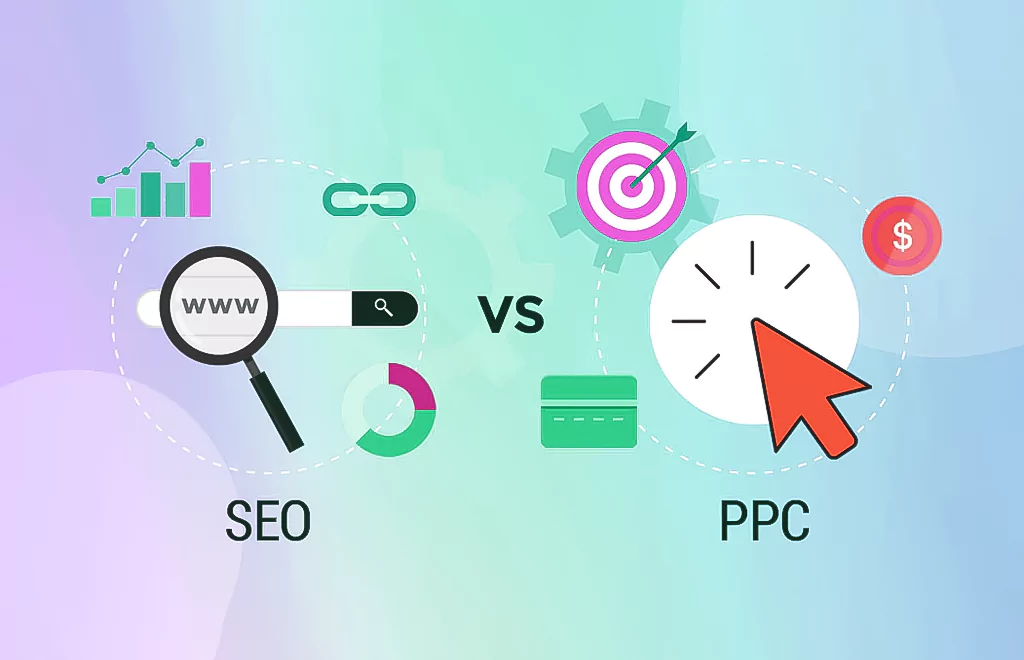
SEO (Search Engine Optimization) focuses on improving organic visibility by optimizing content, technical structure, and authority signals over time.
PPC (Pay-Per-Click advertising) delivers immediate visibility by placing paid ads at the top of search results, with costs incurred for each click.
Both strategies target search intent, but their paths and outcomes differ significantly.
Speed vs Sustainability
One of the biggest differences between SEO and PPC is how quickly results appear.
SEO Performance Timeline
SEO is a long-term investment. It takes time for:
- Content to be indexed and ranked
- Authority signals to build
- Trust to grow with search engines
The payoff is sustainable traffic that doesn’t stop when spending pauses.
PPC Performance Timeline
PPC delivers instant visibility. Once campaigns go live:
- Ads can appear within hours
- Traffic flows immediately
- Results are tightly controlled
However, traffic stops as soon as the budget runs out.
Cost Structure and Budget Control
Both strategies require investment, but costs behave differently.
SEO costs typically include:
- Content creation
- Technical optimization
- Ongoing maintenance
While upfront effort can be significant, organic clicks do not carry a direct cost.
PPC costs involve:
- Continuous ad spend
- Competitive bidding
- Cost-per-click fluctuations
PPC offers precise budget control, but long-term costs can rise quickly in competitive markets.
Traffic Quality and User Intent
Traffic intent matters more than volume.
SEO often attracts users who:
- Research before buying
- Seek detailed information
- Trust organic results
PPC excels at capturing:
- High-intent commercial searches
- Time-sensitive demand
- Competitive keywords that are hard to rank for organically
The best-performing strategies align traffic source with intent.
Credibility and Brand Trust
Search behavior reveals trust patterns.
SEO builds credibility because:
- Organic rankings are earned, not bought
- Users often trust top organic results more
- Consistent visibility reinforces authority
PPC, while effective, is clearly labeled as advertising. It can build awareness quickly but may not carry the same trust signal as organic rankings.
Flexibility and Testing Capabilities
PPC offers unmatched flexibility for testing and experimentation.
With PPC, marketers can:
- Test keywords rapidly
- Adjust messaging instantly
- Pause or scale campaigns on demand
SEO changes take longer to show impact, but successful optimizations tend to deliver lasting value.
Competition and Market Dynamics
Highly competitive industries often require a blended approach.
SEO can struggle when:
- Established competitors dominate rankings
- New sites lack authority
PPC becomes useful for:
- Entering competitive spaces quickly
- Protecting branded search terms
- Supporting launches and promotions
Understanding competitive pressure helps determine the right mix.
When SEO Is the Better Choice
SEO is ideal when:
- Long-term growth is the priority
- Budgets favor compounding returns
- Content-driven authority matters
- The business wants stable traffic over time
It works best for brands willing to invest in quality and patience.
When PPC Is the Better Choice
PPC is the right fit when:
- Immediate visibility is required
- Campaigns are time-sensitive
- Conversion tracking needs precision
- Market testing is a priority
It shines when speed and control outweigh long-term cost efficiency.
Combining SEO and PPC for Maximum Impact
SEO and PPC are not rivals—they are complementary.
A combined strategy:
- Uses PPC data to refine SEO keywords
- Covers short-term and long-term goals
- Maximizes visibility across search results
- Reduces reliance on a single traffic source
Brands that integrate both often outperform those that choose only one.
Frequently Asked Questions
Is SEO better than PPC for small businesses?
SEO is often more sustainable long term, but PPC can help small businesses gain quick visibility.
Can PPC help improve SEO performance?
Indirectly, yes. PPC data can inform keyword targeting and content strategy.
Which strategy delivers higher ROI?
ROI depends on industry, competition, and execution. SEO often wins over time, while PPC excels short term.
Should startups focus on SEO or PPC first?
Many startups use PPC initially for traction while building SEO foundations.
Does SEO still matter if PPC brings fast traffic?
Yes. SEO builds credibility and reduces long-term dependency on paid ads.
Can SEO and PPC target the same keywords?
Yes, and doing so can increase overall search visibility and brand dominance.
How long should a business commit to SEO before judging results?
Most SEO efforts require at least 3–6 months to show meaningful progress.
Choosing between SEO and PPC is not about picking a winner—it’s about aligning strategy with goals. When businesses understand the strengths of each, they can invest confidently and build search visibility that delivers both immediate results and lasting growth.